Spyro 3 Game Info
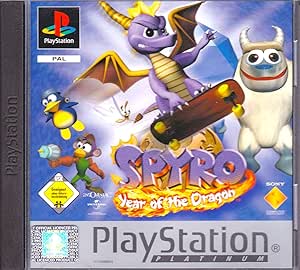
Spyro: Year of the Dragon follows the familiar third-person gameplay style established by the earlier games in the series. The main aim is to explore the various worlds and collect the special dragon eggs hidden throughout them. There are 37 worlds to discover, with eggs obtained in several different ways. Some are tucked away in secret areas, while others are awarded for completing particular challenges or objectives. Not every egg needs to be collected to progress through the main story, and some can only be obtained by returning to an area later in the game.
The different worlds are organised into groups connected by large central areas known as homeworlds or hubs. These act as central points from which Spyro can access the surrounding levels. Before moving on to the next homeworld, players generally need to complete five worlds, collect enough dragon eggs and defeat the area’s boss. Because some eggs require abilities or events that become available later, the game encourages players to revisit previous worlds rather than trying to collect everything on their first visit.
Another important collectible is gems. These can be found throughout the levels, often inside objects such as crates, chests and jars. Spyro uses the gems to pay Moneybags, a bear who has captured various characters and blocks access to certain areas. Paying him allows Spyro to free the captured characters or activate useful features, such as bridges, that open up new routes. Gems and collected eggs also contribute towards the game’s overall completion percentage.
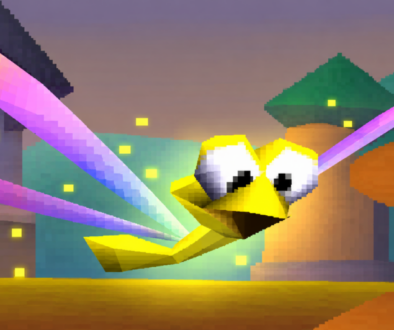
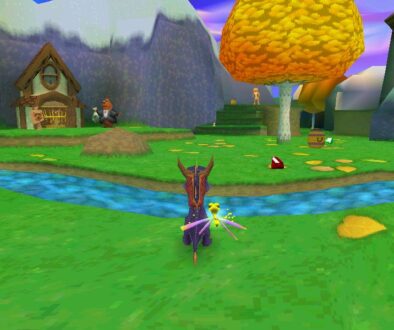
For the majority of the adventure, players take control of Spyro the Dragon. His health is represented by his dragonfly companion, Sparx. As Spyro takes damage, Sparx changes colour to indicate his remaining health before eventually disappearing. Taking another hit while Sparx is absent results in Spyro losing a life and returning to the most recent checkpoint. Sparx can be restored by catching and eating small creatures known as fodder, which can be found throughout the levels.
Spyro has a range of abilities that allow him to both fight enemies and reach different parts of the worlds. These include breathing fire, charging, headbutting, gliding, swimming and diving. Many of the enemies he encounters are the familiar rhinoceros-like Rhynocs, although different enemies have their own strengths and weaknesses. Certain opponents can only be defeated effectively using particular attacks. Throughout the game, Spyro can also encounter Powerup Gates, which temporarily grant him enhanced abilities and provide access to areas or challenges that would otherwise be unavailable.
One of the biggest additions in Year of the Dragon is the introduction of several playable characters alongside Spyro. These characters, collectively referred to as critters, are unlocked as the player progresses. Initially, some of them are held captive by Moneybags and must be rescued before they become playable. Once unlocked, they can be used in specially designated sections of various levels.
Each of the four homeworlds also contains a complete level dedicated to one of these additional characters. In total, there are seven playable characters, each with their own unique abilities and style of play. Sheila the Kangaroo, for instance, is capable of performing a double jump, giving her access to higher areas, while Sgt. James Byrd uses rocket launchers and is able to fly continuously.
The game also offers considerably more than the main egg-collecting adventure. A large selection of minigames and additional challenges can be found throughout the game, usually within separate areas connected to the main levels. Some of these activities build upon ideas introduced in Spyro 2: Ripto’s Rage!/Gateway to Glimmer, while others were completely new to the series. The minigames can involve Spyro or one of the other playable characters and add plenty of variety to the overall experience.
Another feature in Year of the Dragon is the Skill Point system. These are hidden challenges that reward players for completing specific tasks or achieving particular goals within the game’s levels. The challenges can range from performing certain actions to finding unusual ways of interacting with the environment or completing sections under specific conditions.
Skill Points aren’t required to finish the main adventure, but they provide an additional challenge for players who want to explore everything the game has to offer. Successfully completing them contributes towards the game’s overall completion satisfaction and gives players another reason to revisit earlier worlds after gaining new abilities or discovering areas they may have previously missed.
With its mixture of exploration, collectibles, combat, platforming, additional characters and numerous side activities, Year of the Dragon provides a substantial amount of content beyond its main storyline. This combination helped make it a memorable entry in the Spyro series and gave players plenty of reasons to revisit its worlds while working towards full completion.
My own personal opinion is that this game gives fantastic value for money, but is considerably more challenging than the previous games, particularly as you progress through the various homeworlds. However, a bit of hair-pulling frustration is a small price to pay for this gem of a game!